

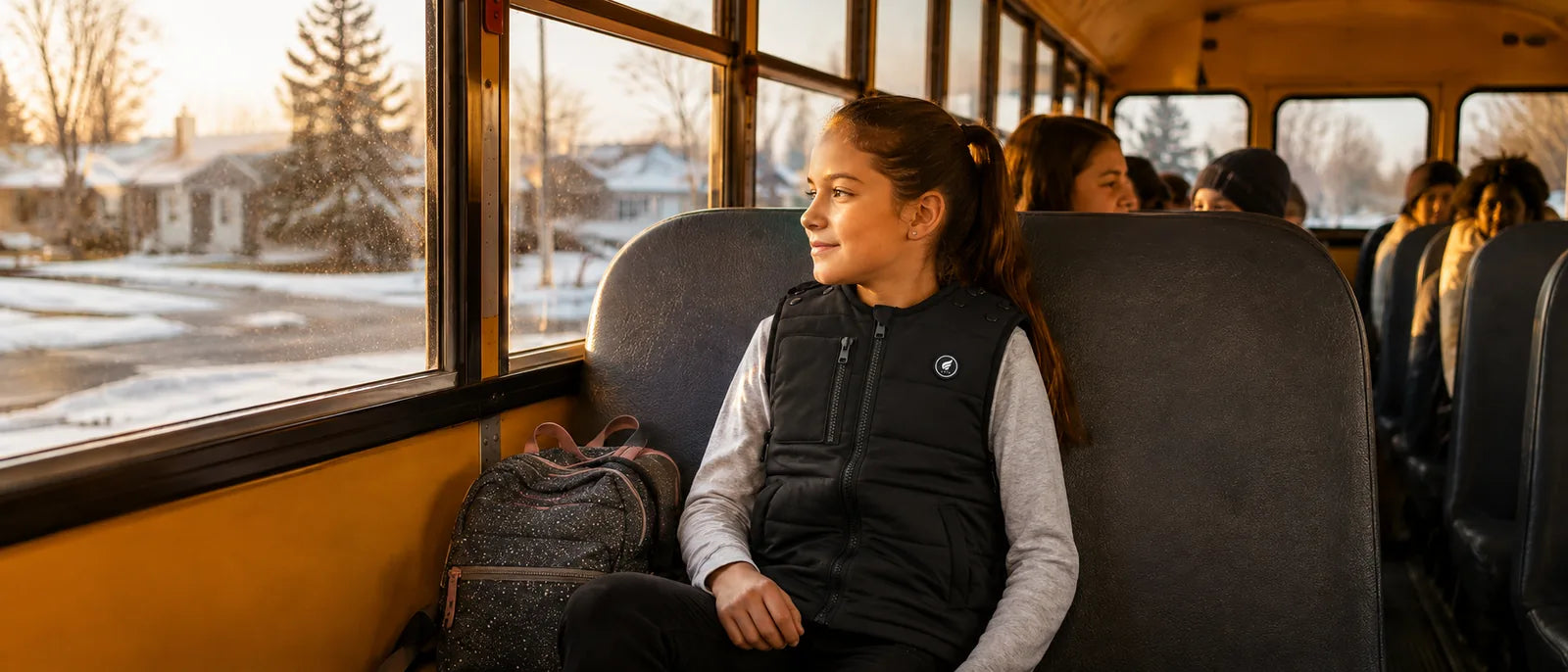
A cold school morning can change quickly. A child may walk to the bus stop, stand still for several minutes, sit through a cool ride, and then step into a much warmer school building. If parents dress only for the coldest part of that morning, the rest of the routine can feel bulky, restrictive, or simply too warm.
At Savior Heat, that is the idea behind our Smart Heated Wearables System and Head-to-Toe Warmth approach: warmth should follow the moment instead of staying fixed all morning.
The practical goal is simple—give the coldest pause enough support while keeping the rest of the school morning easy to move through and manage.

Why the Bus Stop Can Feel Colder Than the Walk
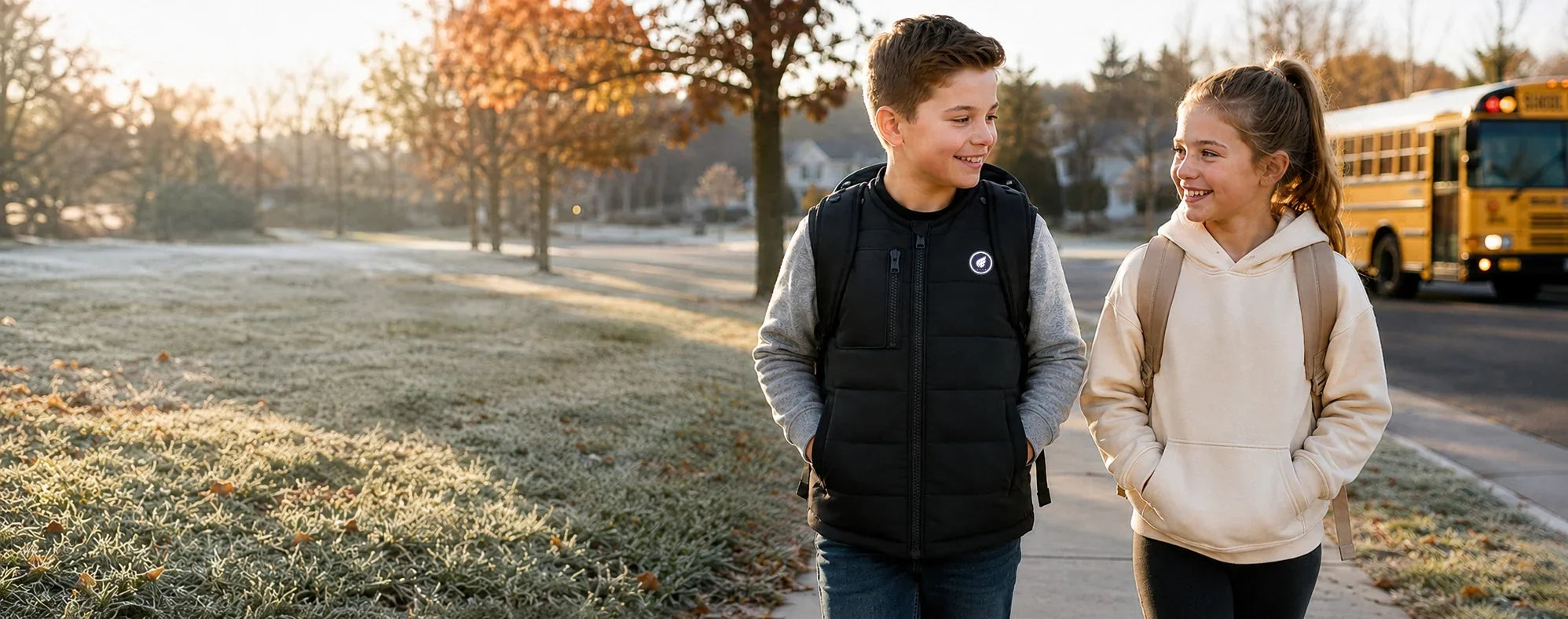
A child can feel fine while walking to the bus stop and then feel colder after standing there for a few minutes. The weather has not necessarily changed—the child's activity level has.
Walking keeps the body active. At the bus stop, that movement stops while the child may still be exposed to cold air, wind, or damp conditions. A short wait in a sheltered spot can feel very different from several minutes on an open corner.
That is why the waiting period often deserves more attention than the walk itself. The colder feeling may come less from a sudden change in weather and more from the shift from moving to standing still.
Add Warmth Where the Morning Needs It Most
Because the bus stop may be the coldest part of the morning, it makes sense to prepare for that pause without dressing the child for maximum warmth from the moment they leave home.
If the wait is short and sheltered, regular layers may already be enough. On colder, windier, or longer waits, having an extra source of warmth that can be adjusted can make the routine more flexible without adding unnecessary bulk for the rest of the morning.
If heated gloves or a heated vest are already part of the child's cold-weather setup, their most useful role here is simple: provide extra support during the colder wait, then stay easy to manage as the morning changes.
A quick check can help:
- Does it make the waiting period more comfortable?
- Can the child still move and handle ordinary school-morning tasks?
- Can it be adjusted easily when the environment gets warmer?
If you're still deciding which type of heated gear fits your child's needs, see our Kids Heated Gear Parent's Guide.

Make Sure Warmth Still Leaves Room to Move
Extra warmth should make a cold school morning easier, not make everyday tasks harder. Before heading out, check that your child can still comfortably:
- zip and adjust their coat;
- carry and reposition their backpack;
- hold a handrail or open a door;
- get into a car or bus seat without feeling restricted.
These everyday movements are a simple reality check. What feels comfortable while your child is standing still should still work once they start walking, climbing onto the bus, or moving through school.

Adjust as the Morning Changes
There is no single point when every child needs to adjust their warmth. Instead, watch three simple cues:
- Comfort: Are they still cold or starting to feel warm?
- Activity: Are they sitting still or moving more?
- Environment: Have they moved somewhere warmer?
A moving bus does not necessarily mean a moving child—they may still be sitting quietly. But once they start walking again or enter a warmer building, their warmth needs may change.
This is where kids' heated clothing can be especially useful. Instead of adding a bulky layer for a short, chilly wait, adjustable heat provides extra warmth when it is needed and can be turned down or off as conditions change. Regular layers still do the essential job; active heat simply makes that extra warmth easier to adjust.
For school mornings, it also helps to give your child one simple cue they can manage on their own: if you move somewhere warmer and start to feel too warm, make one small adjustment. Practicing that routine at home can make the transition easier when a parent is no longer there to help.
Summary
A cold school morning is easier to manage when warmth follows the situation instead of staying the same from start to finish. Give the waiting period the extra support it needs, make sure your child can still move comfortably, and adjust as activity or the environment changes.
For a broader plan that covers the full school day, see our Back-to-School Cold Weather Checklist for Kids & Families.
Savior Heat is designed to support those changing winter moments with warmth that fits into the routine—not the other way around.
Warmth Without Exception.

Share:
Back-to-School Cold Weather Checklist: Smart Layering for Changing School Days