

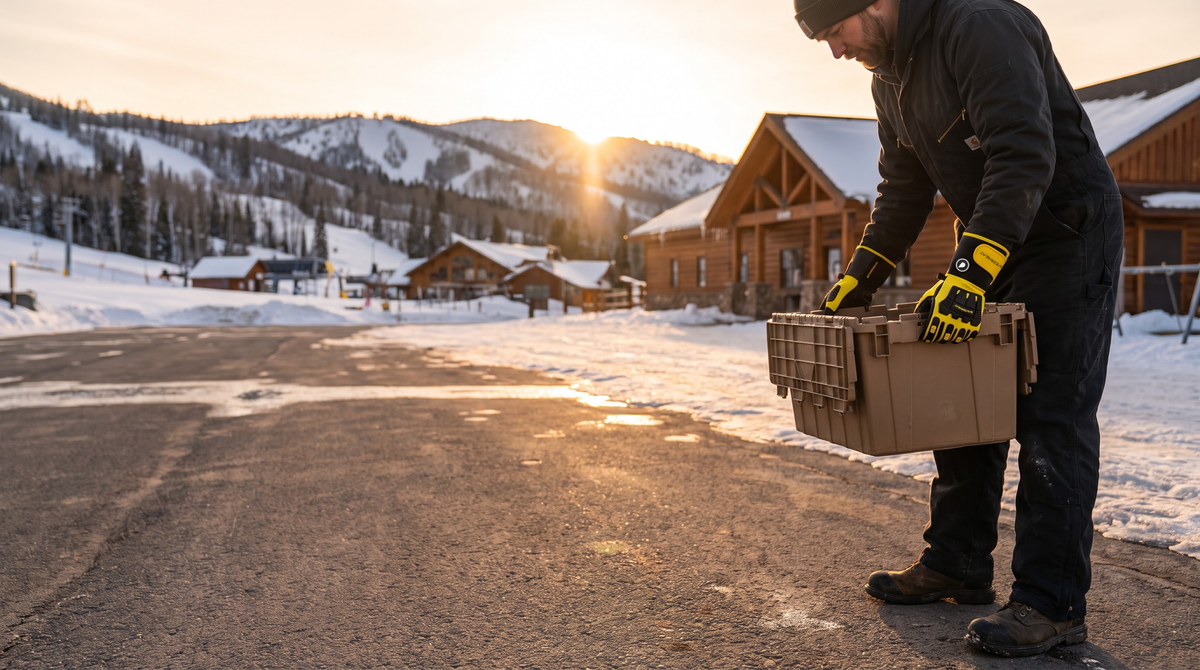
Choosing heated work gloves for cold-weather work is not a contest for the highest temperature claim. The right pair is the one whose heating coverage, low-setting runtime, dexterity, grip, protection, and weather-related construction match the job you actually do.
At SAVIOR HEAT, our Head-to-Toe Warmth approach starts with understanding how different parts of the body experience the cold. For hands-on work, that means finding warmth that works alongside the grip, movement, and practical demands of the job.
Heated Work Gloves Start With the Job, Not the Temperature
Before comparing models, describe the work in practical terms. The most useful questions are:
- How much dexterity is required? Frequent tool changes, fasteners, controls, and device use place more value on finger mobility and a secure fit.
- What kind of grip is needed? Smooth handling, wet handling, pulling, and forceful tool work do not place the same demands on the palm.
- What kind of contact does the task involve? For everyday handling, palm reinforcement and back-of-hand padding may help with minor bumps and routine contact. Tasks involving significant impact, crushing, cutting, or other occupational hazards require separately verified protective performance.
- How long is the work period? A short inspection and a long shift should not be planned around the same heat setting or battery assumption.
- What weather will reach the glove? Wind, precipitation, damp materials, and changing exposure make construction details as important as the heating system.
This is why a “best heated work gloves” list can be less useful than a job-fit comparison. Temperature is only one input. The decision is whether the glove can provide practical warmth while preserving the hand movement, grip, and protection that the work requires.

What to Look for in Heated Work Gloves
Prioritize the criteria according to the job.
Heating coverage. Cold fingers can make everyday tasks like gripping tools, handling small parts, or adjusting equipment feel more difficult. That's why it matters where a heated glove delivers warmth—not just how hot it can get. The SAVIOR HEAT work gloves compared here feature heating across the back of the hand, fingers, and fingertips, bringing active warmth to areas that are often exposed to the cold during outdoor work.
Useful heat control. Three listed levels—high, medium, and low—allow the wearer to balance warmth and runtime as conditions change. A control is useful only when it can be operated during the work. Look for a secure battery pocket and a comfortable wrist fit. Consider how easily the controls can be reached and how the gloves feel when your hands are moving during work.
Fit and dexterity. Heated work gloves should be sized for the intended wearer, not chosen only by jacket size or a general men’s/unisex label. The four models compared here are available in sizes S–2XL. Measure the intended wearer’s hand against the product sizing method, and leave enough room for finger movement without creating loose material that interferes with tools.

Battery planning. Check battery requirements, charging time, and the setting used for any runtime figure. “Long battery life” has little meaning unless it matches the heat level and the length of the planned work period.
Construction for the task. Materials, palm reinforcement, grip details, padding, and closures should be read as a combined work requirement. Compare a leather-oriented glove with a reinforced work-glove construction according to the hand movement, grip, and contact involved.
Heating Coverage, Controls, and Cold-Weather Runtime
For the four SAVIOR HEAT models compared here, listed runtimes are approximately 3–3.5 hours on high, 6 hours on medium, and 13 hours on low.
Each model uses 2 × 3000mAh batteries with USB-C charging.

In stationary Savior Heat Laboratory testing at -20°C (-4°F), low-setting runtime ranged from approximately 11.5 to 12 hours across the four models. These results provide a cold-weather reference, but actual runtime may vary with conditions and usage.
If your work requires sustained higher heat, compare the expected runtime at that setting with the length of your shift. For longer work periods, first check whether an appropriate spare set of batteries is available and compatible with the gloves. If it is, consider having it ready so you can continue using the gloves when the first set runs low.
Charging time matters too. With a listed charging time of approximately 3–3.5 hours under the specified conditions, you can use breaks to recharge when a suitable charging option is available. Keep in mind that shorter breaks may only allow a partial recharge, so plan ahead based on your work schedule.
When you're checking a message, looking up work information, or using a touchscreen device in the cold, taking off your gloves can interrupt your workflow and expose your hands to the cold. Touchscreen-compatible fingertips may make it easier to handle basic screen tasks without removing your gloves, although performance can vary depending on the device and working conditions.
Materials, Grip, and Weather Protection
Material selection matters when you're handling tools, gripping equipment, or working with different surfaces in the cold. Look at how the outer material, palm reinforcement, and grip detailing match the kind of work you do most often.
The Goatskin Leather Heated Work Gloves route includes Pro Black (GVW201G3) and Classic Brown (GVW202G3). Both use a 100% goatskin leather shell, 180g 3M™ Thinsulate™, reinforced palm and thumb areas, and EVA cushioning near the back-of-hand joints. Compare them by fit, color preference, hand movement, and availability rather than assuming one is warmer, more durable, or more protective than the other.
The Heavy-Duty Heated Work Gloves route includes Safety Orange (GVW204G3) and Hi-Vis Yellow (GVW205G3). Both combine 220g 3M™ Thinsulate™, raised PVC back-of-hand and knuckle detailing, and reinforced work-glove construction. GVW204G3 features silicone palm grip detailing and added reinforcement, making these construction details worth considering for everyday cold-weather handling.
GVW205G3 uses a rubber-composite outer construction with reinforced palm and thumb areas. Compare these outer-material and palm details with GVW204G3 to decide which construction better matches your handling needs and preferences.
The product specifications also identify a Hipora® waterproof component. Read it as a component and construction detail rather than proof that the complete glove meets a particular waterproof performance level. If the task involves sustained rain, immersion, or wet handling, evaluate the complete glove’s stated protection and the work conditions separately. Heating and weather protection are related planning questions, but one does not prove the other.

Match the Glove to the Job
Different cold-weather tasks place different demands on your gloves. Think about how you handle tools and equipment, where you need reinforcement, and which construction details matter most to your work.
| Your work priorities | Models to consider | Why consider them |
|---|---|---|
| Everyday tool and equipment handling with a preference for leather | Goatskin Leather Heated Work Gloves – Pro Black (GVW201G3) / Goatskin Leather Heated Work Gloves – Classic Brown (GVW202G3) | Goatskin leather construction, reinforced palm and thumb areas, and flexible finger detailing |
| Frequent tool handling where palm grip design is a priority | Heavy-Duty Heated Work Gloves – Safety Orange (GVW204G3) | Silicone palm grip detailing and reinforced palm construction |
| Tasks where palm reinforcement and outer-material construction are priorities | Heavy-Duty Heated Work Gloves – Hi-Vis Yellow (GVW205G3) | Rubber-composite outer construction with reinforced palm and thumb areas |
These are starting points, not fixed rules for specific jobs. Consider fit, dexterity, and the surfaces you regularly handle before choosing. Check the product pages for current sizing and availability, and make sure the fit, grip, and construction details match the tasks you perform most often.
A Checklist for Heated Gloves for Work
Before choosing your heated work gloves, ask yourself:
- Warmth: Does the heating coverage reach the areas of your hands that get cold most often?
- Runtime: Will the battery last long enough at the heat setting you expect to use? Would spare batteries or charging during breaks help?
- Fit: Can you comfortably grip tools, move your fingers, and handle equipment without excess bulk?
- Grip and materials: Do the palm design and outer materials match the surfaces and equipment you regularly handle?
- Weather exposure: Are the gloves suitable for the wind, rain, snow, or damp conditions you expect?
- Controls and convenience: Can you adjust the heat comfortably and use any touchscreen features you need?
- Workplace safety: If your tasks require certified protective gloves, have you verified the relevant safety ratings?
Use these checks to narrow your options based on your actual work conditions, rather than choosing by appearance or maximum heat alone.
If you're comparing heated gloves for activities beyond cold-weather work, our heated gloves buying guide covers the broader considerations, including fit, heating coverage, dexterity, and controls.
Summary
The best heated work gloves aren't necessarily the ones with the highest heat setting or the longest advertised runtime. They're the ones that keep warmth practical for the way you work—whether you're gripping tools, handling equipment, or spending long hours outdoors in the cold.
SAVIOR HEAT offers goatskin leather and reinforced work-glove options with different materials, grip details, and construction features. Start with the demands of your job, then compare the designs, fit, and battery runtime to find the pair that works for you.
Explore the heated work gloves compared above to find the right fit for your cold-weather routine.
Warmth Without Exception


Share:
Ski Gloves vs. Mittens: Which Is Better for Warmth and Dexterity?
Family Christmas Gifts: Warm Ideas for Parents, Kids & Families