

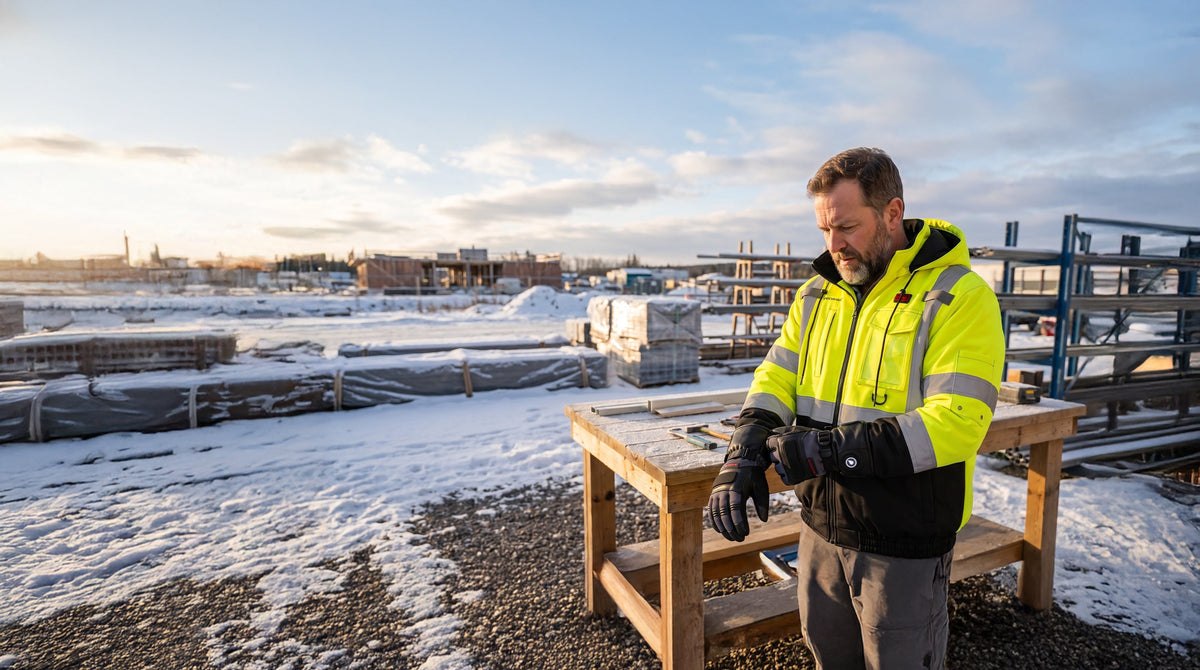
Working outside in cold weather is not one steady exposure. You may move intensely for part of a shift, stand still while waiting, handle tools with bare fingers, or move between wind, wet conditions, and shelter. If you're wondering how to stay warm working outside, the answer isn't simply to wear the thickest layers you can find.
Match your warmth strategy to the work sequence: manage moisture, protect against wind and wet, keep your core comfortable, preserve hand control, and adjust insulation or active heat as your activity changes. This reflects SAVIOR HEAT's Head-to-Toe Warmth philosophy—understanding how different parts of the body experience cold and choosing warmth that fits the activity. The goal is to stay comfortably warm throughout your shift without excessive sweating, bulky layers, or reduced dexterity.
Start by Identifying What Is Actually Making You Cold
Before choosing another layer or turning on heat, identify the cold problem that keeps returning. One job can create different needs at different moments.
- High-output work: Digging, lifting, climbing, or fast walking can make you warm quickly. Too much insulation can trap sweat and make later exposure feel colder.
- Static work: Waiting, monitoring equipment, directing traffic, or standing between tasks gives your body less movement-generated heat.
- Hand-control problems: Cold fingers can make it harder to grip tools, operate controls, fasten parts, or use a phone.
- Core exposure: Long periods in cold air, especially with wind on your torso, can make the rest of your clothing feel less effective.
- Wind and wet: Damp fabric and moving air can make a layer feel colder even when the temperature has not changed.
Ask: When does the cold start, which body area is affected first, and what changes when the task changes? This prevents you from solving a hand problem with more torso bulk.

Build Warmth Around the Work Sequence
A practical approach to how to stay warm while working outside begins with a flexible clothing system rather than one fixed outfit. The goal is to keep working comfortably and adjust before sweat, restricted movement, or prolonged exposure becomes the main problem.
Use these layers as a working framework:
- A moisture-managing base layer: Keep the layer next to your skin comfortable during movement; avoid a heavy layer that cannot adapt when your output increases.
- A flexible insulating layer: Add warmth that can be opened, removed, or put back on. What works while standing may be excessive while carrying or climbing.
- A wind- and weather-resistant outer layer: Reduce moving air and light weather on the layers beneath. Check openings at the neck, wrists, and hem.
- Hand protection that matches the task: Warm handwear is not useful if it prevents a secure grip or makes controls difficult. Check that you can flex your fingers, feel the tool, and release your grip.
Think in terms of adjustment points. A zipper, cuff, removable layer, or change of gloves can matter more during a long work period than maximum warmth.

Protect Dexterity Before Cold Steals It
Hands often become the first limiting factor in outdoor work. When fingers lose comfort or movement, the task may take longer, require more force, or become harder to control.
For how to stay warm at work outside, evaluate handwear by the movements your job requires:
- Can you close your hand around the tool without excessive bulk?
- Can you operate buttons, levers, zippers, or touchscreens?
- Does the palm stay stable when the handle is wet or textured?
- Can you adjust the handwear during a high-movement task?
- Does the cuff work with your jacket sleeve rather than leaving a gap?
If your hands stay cold even after the rest of your clothing is appropriate, targeted heat may help. For example, SAVIOR HEAT's Goatskin Leather Heated Work Gloves – Pro Black (GVW201G3) combine heating across the hand and fingers with reinforced palm areas and touchscreen fingertips. These features can be useful for cold-weather tasks that require both warmth and frequent hand movement, but fit and grip should always be checked against the tools you actually use.
Start with the movements, grip, fit, and exposure that define your work. If the glove changes how safely or precisely you handle a tool, reconsider the fit and task match.
For more help choosing the right pair, our heated work gloves guide covers fit, grip, heating coverage, and other features worth comparing before you buy.
Keep Your Core Warm During Long Exposure
Cold-weather work can feel manageable while you are moving and much harder when you stop. If the main issue is a chilled torso during long periods of standing, waiting, driving between tasks, or working at a lower pace, prioritize core warmth and wind protection before adding heat everywhere else.
A core-focused solution should leave enough room for the base and insulating layers underneath without compressing them. It should allow the arms to move through the work range. Look for a comfortable closing collar, adjustable cuffs, and pockets that do not interfere with equipment.
For workers who need additional warmth during long periods outdoors, a heated work jacket can be a useful option. For example, the SAVIOR HEAT Heated Work Jacket (JKW203G3) features five heating zones across the left and right chest, back of the neck, upper back, and lower back. Its weather-resistant outer fabric and reflective details make it worth considering for outdoor work involving extended cold exposure, changing weather, and periods of limited movement.
A jacket that feels comfortable while standing may need to be opened or exchanged for a lighter layer during high-output work. Active warmth should support adjustment, not prevent it.

Use Active Heat Selectively, Not Automatically
Active heat is most useful when it answers a specific gap. Before switching it on, check whether your base layer is dry, wind is entering through an opening, your hands are cold because of exposure or poor fit, or you are standing still long enough to lose movement-generated heat.
If the answer changes during the shift, change the heat strategy too. Start at a manageable setting rather than using the highest setting as the default. Reassess after movement begins, on entering shelter, or when wind and wet conditions change.
For example, if you're carrying materials or doing physically demanding work, lower the heat setting and open a jacket zipper or remove an insulating layer before you start sweating. When you stop moving for an extended period, add insulation or turn up the heat as needed. If your clothing becomes damp, change into dry layers when possible rather than relying on extra heat alone.
For powered products, know how to reach the controls and keep the battery setup consistent with the product instructions. The goal is enough comfort and finger movement to work without interruption.
A Quick Warmth Checklist Before and During the Shift
Use this short check whenever the weather, task, or pace changes:
- Problem: Which body area is cold first?
- Exposure: Is the problem related to sweating, standing still, wind, damp clothing, or gaps in your layers?
- Control: Can you still grip tools, operate controls, and move your fingers naturally?
- Adjustment: What can you open, remove, add, dry, or activate before the problem grows?
- Recheck: Does the change still make sense for the next task?
This keeps warmth connected to work performance. For a powered product, confirm fit, battery, charging, care, and operating details in its instructions before use.
Before your next shift, check your cold weather work gear against the tasks, conditions, and time you'll spend outdoors—not just the temperature in the forecast.
Summary
The best way to stay warm while working outside is to match protection to the work sequence. Identify when you start feeling cold, which body areas are affected, and whether sweat, inactivity, wind, or wet conditions are contributing to the problem. Build a flexible base, insulation, outer layer, and handwear system; adjust it during transitions; and use active heat only where a clear gap remains. Heated gloves can support persistent hand-cold and dexterity needs, while a heated jacket can support core warmth during longer exposure. The goal is steady comfort and usable movement—not simply more heat.
On your next shift, use the warmth checklist above and pay attention to when and where you start feeling cold. That observation will make it easier to choose the right category, layer, or focused solution for your work.
Warmth Without Exception

Share:
Family Christmas Gifts: Warm Ideas for Parents, Kids & Families