

div class="blog-article-content">
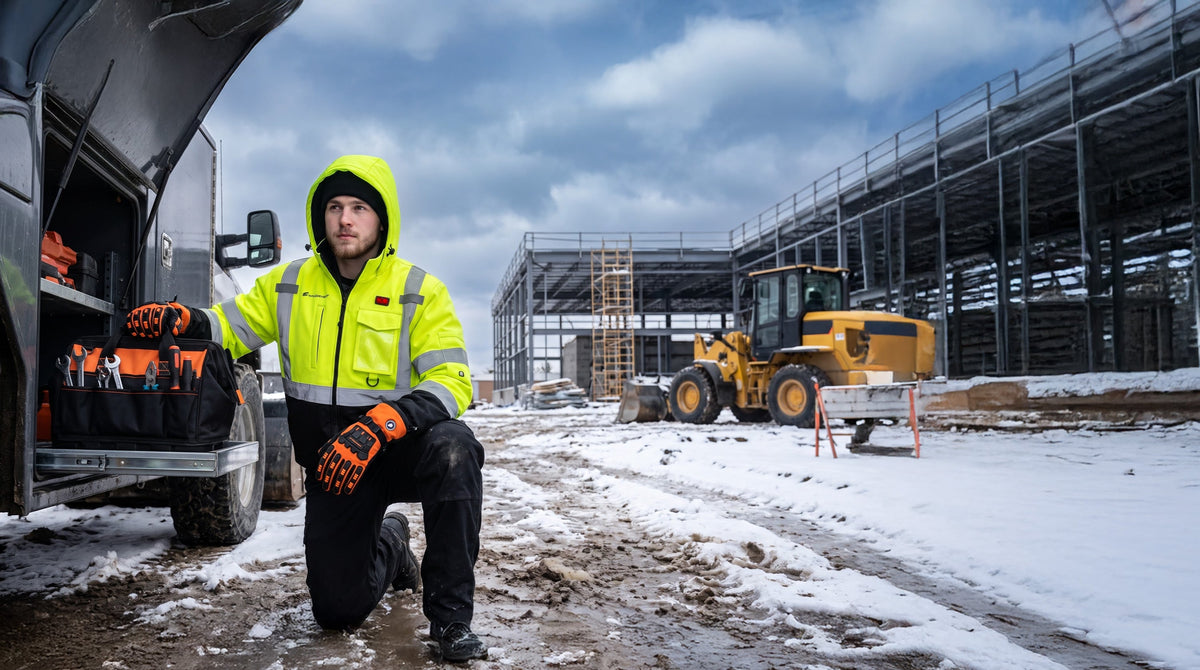
The right cold weather work gear is more than the thickest coat or warmest glove. Build for Head-to-Toe Warmth by closing the real gaps across hands, core, and feet. Start with activity level, wind and wet conditions, time spent standing still, and the control your job requires, then choose cold weather work clothes that keep you warm without disrupting the work.
Why Outdoor Work Gear Should Cover Hands, Core, and Feet
Outdoor work does not make every part of the body cold in the same way. A worker moving materials may generate body heat but still lose finger comfort on fasteners. Someone monitoring equipment may cool down while stationary. Divide your winter work gear into three zones:
- Hands: Preserve grip, finger movement, tool feedback, and access to controls.
- Core: Manage warmth during standing, low-output work, and changing weather.
- Feet: Maintain comfort inside the space and pressure limits of your work boots.
This is a system, not a requirement to buy every heated category. If hands fail first, improve hand coverage before adding torso bulk. If your core chills during long exposure, a jacket may matter more than a heavier glove. If feet are the recurring distraction, start with boot fit, dry socks, insulation, and heated socks as a focused option.
Start With the Work Conditions, Not the Product
Before comparing products, describe the workday:
- How much do you move? High-output work can create heat and sweat; stationary work reduces the warmth your body generates.
- How long are you exposed? A short trip between buildings needs a different system from a full shift outdoors.
- What reaches your clothing? Wind, light rain, snow, wet tools, and damp surfaces change the value of insulation and outer-layer protection.
- What must you control? Tool handles, small parts, touchscreens, radios, levers, and fasteners place different demands on fit and dexterity.
High-output work may need adjustable layers and low-bulk handwear. Choose outdoor winter work clothes for the next task, not the longest feature list. Stationary work may benefit from focused core or hand warmth, while wet, windy sites make closures and weather-resistant fabric important. That is the practical role of cold weather work apparel.
Build the Core Layer: When a Heated Jacket Makes Sense
A heated jacket makes sense when the torso is the main warmth gap: extended standing, slow-paced work, wind across the chest and back, or repeated transitions between movement and waiting. Evaluate the jacket by:
- heating coverage across the areas that become cold;
- cuffs, collar, hem, hood, pockets, and access to work tools;
- product-level fabric and water-resistance specifications;
- visibility needs at the worksite; and
- documented runtime and charging time compared with your work period.
If you need targeted core warmth during a long or changeable shift, the SAVIOR HEAT JKW203G3 heated work jacket is a representative option. It combines five heating zones—left chest, right chest, back of neck, upper back, and lower back—with a 6000mAh battery. Its 300D Oxford outer fabric has a stated 5000 mmH₂O static water-pressure rating, while reflective details and work-storage features support practical worksite use. These reflective details do not replace any site-required high-visibility clothing or PPE.

Use these specifications to compare coverage and worksite needs; required PPE controls the decision.
Protect the Hands Without Losing Control
Hands often determine whether work gear helps or gets in the way. Warmth has to coexist with grip, finger movement, task protection, and access to controls. Ask:
- Can you close your hand around a tool without forcing your grip?
- Can you handle small parts, fasteners, or a radio?
- Does the palm stay stable on smooth, wet, or textured handles?
- Can you reach a touchscreen without removing the glove?
- Does the cuff meet the jacket sleeve without leaving a cold gap?
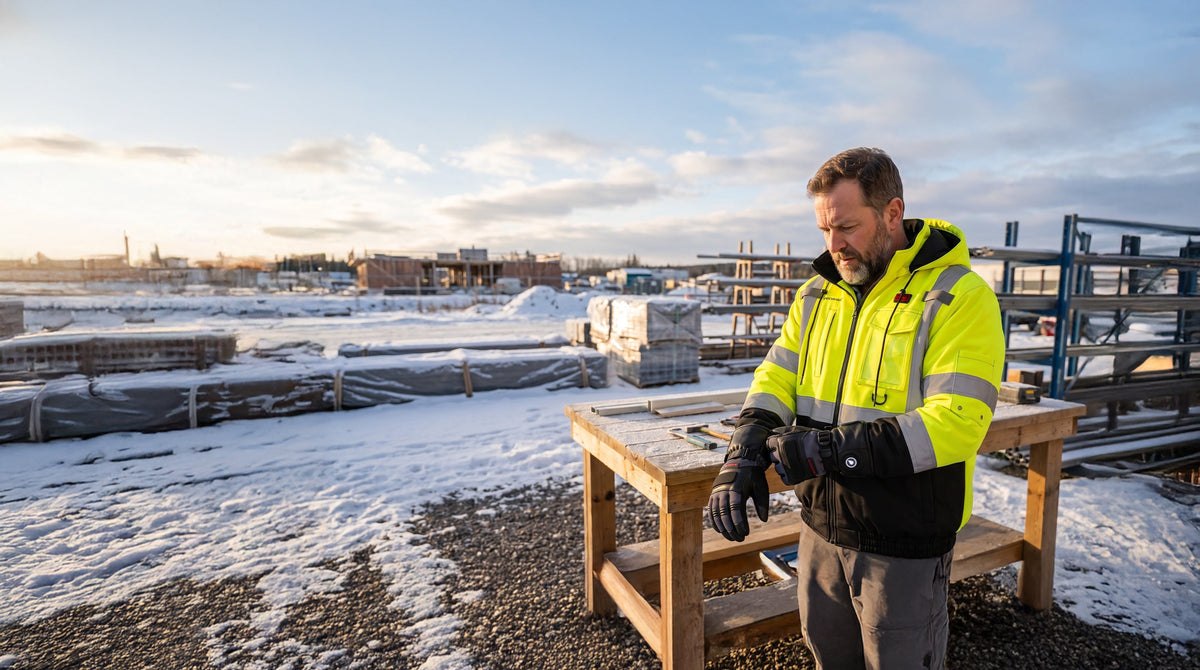
If finger warmth must be balanced with handling control, the SAVIOR HEAT GVW204G3 heated work gloves are a representative example. They provide heating across the back of the hand, fingers, and fingertips, with a Hipora® membrane, reinforced palm, silicone grip detailing, and touchscreen-compatible thumb and index fingertips. These are product construction and convenience features—not proof of a specific occupational impact rating, protection from every work hazard, or identical whole-glove performance in every wet condition. Required worksite PPE rules remain the priority. For more detailed guidance on comparing fit, grip, heating coverage, and other features, see our heated work gloves buying guide.

Check the Feet Before Cold Becomes a Distraction
Cold feet may come from wet socks, restricted toe space, cold surfaces, insufficient insulation, or a cramped boot-and-sock combination. Start with the basics:
- Keep the foot environment dry during the work period.
- Make sure socks and insulation do not crowd the toes.
- Leave room for the boot’s intended fit and normal movement.
- Notice whether cold appears during standing, walking, or wet-ground exposure.
- Plan a dry replacement layer when moisture is likely.
Heated socks can be a useful feet option when cold remains inside an otherwise appropriate boot system. Evaluate them by activity, boot compatibility, heating-zone placement, controls, comfort, battery handling, and runtime—not by a single temperature claim. For category-specific selection criteria, continue with the heated socks buying guide.

Match the System to the Workday
Reassess at natural transitions:
- Before high-output work: Open or remove a layer if body heat and sweat are rising.
- Before stationary work: Restore core or hand warmth before cold becomes a distraction.
- Before wind or wet exposure: Close cuff, collar, and hem openings.
- During tool changes: Confirm glove bulk has not changed tool control.
- During breaks: Dry or replace damp layers where practical and review the next task.
Use a heated jacket, heated gloves, or heated socks as optional adjustments for a specific cold problem—not as a required all-in-one purchase. Match the setting to the current gap, then reassess when movement, weather, or work phase changes. Required safety footwear, high-visibility clothing, protective gloves, and other PPE still take priority at the worksite.
| Work situation | Core / Clothing layers | Hands | Feet / Footwear |
|---|---|---|---|
| High-output outdoor work such as moving materials or sustained physical labor | Moisture-managing base layer; light insulating layer only if needed; breathable outer layer that allows movement. Reduce bulk as body heat and sweat rise. | Low-bulk gloves with a secure palm and enough finger movement for tools and fasteners. Add heated gloves only if hand cold persists without reducing control. | Dry, non-crowded socks and required safety work boots with room for normal toe movement. Carry a dry spare pair when moisture is likely. |
| Long stationary shifts such as monitoring equipment or standing watch | Base layer, insulating mid-layer, and wind-resistant outer layer. A heated jacket is a focused core option when passive layers do not close the gap. | Insulated gloves that still allow radio, touchscreen, or control use; check cuff overlap before the shift. | Warm, dry socks and appropriately insulated work boots; avoid extra layers that compress the toes. |
| Wet or windy conditions with rain, spray, snow, or exposed surfaces | Wicking base layer, insulating layer as conditions require, and a weather-resistant outer layer with cuffs, collar, and hem adjusted to limit openings. | Gloves chosen for the required grip and task PPE; a component such as a Hipora® membrane does not replace site-required PPE for the task. | Dry socks, a moisture-appropriate boot system, and a replacement pair if the workday may wet through the first layer. |
Cold Weather Work Gear Buying Checklist
Before choosing winter work gear, answer these questions:
- Which area becomes uncomfortable first: hands, core, or feet?
- Is the main exposure movement, waiting, wind, wet, or temperature change?
- Can you perform the job’s grip, control, and fine-motor movements in the chosen fit?
- Will the garment layer comfortably with existing work clothes and required PPE?
- Do the heating zones match the area that needs focused warmth?
- Does the stated runtime fit your planned work period at the setting you expect to use?
If the answers point to one clear gap, solve that gap first. A hand-focused glove, core-focused jacket, or feet-focused option can be more useful than replacing an entire wardrobe.
Summary
Useful cold weather work gear is a coordinated system built around the real exposure gaps in your job. Start with work conditions, then cover hands for grip and control, the core for sustained exposure, and feet for boot-compatible comfort. A heated jacket such as the JKW203G3 can serve as a core option when stationary work, visibility, and work-pocket needs matter. Heated work gloves such as the GVW204G3 can serve as a hand option when finger warmth and grip-related construction must work together. Keep heated socks as a focused feet option, and use the linked category guides for deeper hand or sock comparisons. The right choice is the one that preserves usable warmth and work control through the actual shift.

Share:
How to Stay Warm When Working Outside in Cold Weather