


The most practical gifts for people who are always cold are not necessarily the biggest winter items. They are the ones that solve a repeatable cold moment without making the recipient change their whole routine. Start with where the person gets cold, then match the gift to home comfort, daily commuting, outdoor hands, or outdoor feet.
When you are looking for gifts for someone who is always cold, the useful question is not “Which heated product looks most impressive?” It is “What will this person naturally reach for on an ordinary winter day?” That answer gives you a better gift than a long list of unrelated winter accessories.
The Right Gift Solves a Repeatable Cold Moment
A good gift should connect to a situation the recipient experiences often. Someone who complains about cold floors during quiet evenings needs a different solution from someone who stands outside for work, walks the dog before sunrise, or spends weekends in boots.
Use the cold moment as the first filter:
- Home: Look for simple indoor warmth that can stay near the sofa, desk, or bedroom.
- Commute: Choose a layer that fits ordinary clothing and does not require a special outfit.
- Outdoor hands: Focus on hand coverage, dexterity, and whether the person already owns an outer glove.
- Outdoor feet: Check boot fit, sock size, and how much room the person has inside their footwear.
This is the core logic behind useful gifts for cold people. The best match is the one that fits a repeated habit, not the one with the longest feature list.
Match the Gift to Home, Commute, or Outdoor Life
Use this table to move from the recipient’s routine to the most relevant gift category:
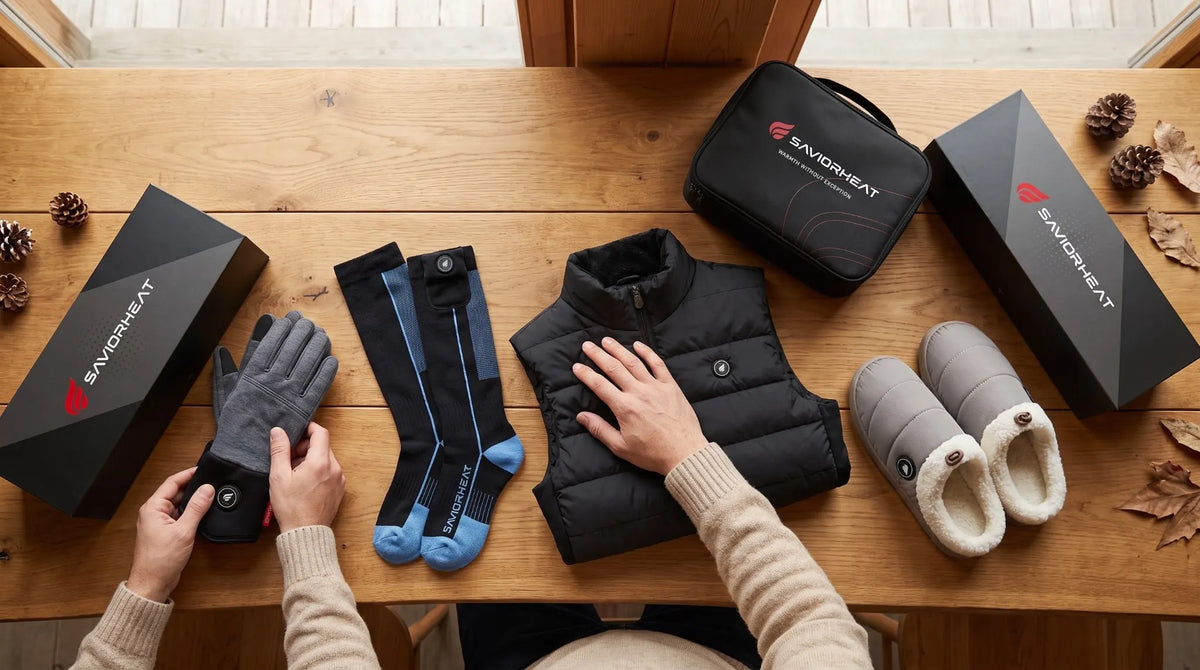
| Recipient routine | Gift direction | Savior Heat example | What makes it a natural fit |
|---|---|---|---|
| Cold floors, chilly rooms, or slow evenings at home | Heated slippers | Heated home shoe (SPH203G3) | Five size ranges and a drawstring closure support a more deliberate indoor fit |
| Cold torso during commuting or low-movement errands | Heated vest | Heated vest (VTL201G3) | S–3XL clothing sizing and coverage across five core areas |
| Cold hands during outdoor routines or phone use | Heated Glove Liner | Heated Glove Liner (GVL116G3) | Slim liner format, touchscreen fingertips, and warmth across the back of the hand and fingers |
| Cold feet inside boots or during winter outdoor activity | Heated socks | Heated ski socks (SOS208G3) | A boot-oriented category with a dedicated S/M/L/XL size path |
Each example has a clear recipient story. The model is not the starting point. The person’s routine is.
Home Comfort: Heated Slippers for Indoor Cold

Heated slippers are often the easiest gift for someone whose coldest moment happens indoors. They do not ask the recipient to rethink a work outfit, learn a new layering system, or carry an accessory outside. They can live by a favorite chair, home office, or bedside table and become part of an existing evening routine.
Savior Heat’s heated home shoe, SPH203G3, is a practical example of this route. Its five size ranges run from 36/37 through 44/45, and its drawstring closure gives the wearer a way to adjust the shoe opening. For gifting, those details make the decision more concrete: you can start with the recipient’s shoe size instead of guessing whether a one-size accessory will feel right.
This is the right direction when you know the person’s shoe size and they spend meaningful time at home. It is less suitable when the recipient mainly needs warmth inside tight boots or wants one product for outdoor movement. In those cases, move to heated socks or a hand-focused option.
Daily Core Warmth: A Heated Vest for Commute and Errands

A heated vest makes sense when the recipient’s main complaint is a cold torso during commuting, waiting, walking, or other lower-movement winter situations. It works as clothing first, so the gift is easier to understand when you know the person’s usual clothing size and how they layer.
Savior Heat’s heated vest, VTL201G3, covers five core areas and is available in S–3XL sizing. That makes it a focused route for someone who already owns hand and foot gear but still feels chilled through the middle of the body. The key is to match the vest to the recipient’s normal layers instead of making it a standalone winter uniform.
If you are deciding whether the person needs a torso layer or a closer-to-body option, compare heated vest vs heated base layer before you choose. The better gift is the one that fits the recipient’s existing wardrobe with the least friction.
Hands and Feet: Match the Gift to Existing Gear
Hand and foot gifts can feel more personal because they target the exact place where a recipient loses comfort. They also carry a higher fit risk, so use them when you know the person’s size or their usual gear well.
For hands, the GVL116G3 Heated Glove Liner is a useful route when the recipient wants a slim hand layer rather than a bulky replacement for everything they already wear. GVL116G3 is a 2mm liner with touchscreen fingertips and heating across the back of the hand and fingers. That combination suits someone who values hand movement and already has an outer glove or shell they want to keep using. Check the fit of the complete handwear setup before gifting; the liner should support the existing routine, not make it harder.
For feet, SOS208G3 represents the heated socks route for boot-based winter routines. SOS208G3 is part of the heated ski socks category and follows an S/M/L/XL size path covering foot sizes from 35 through 48. That makes it a relevant direction for someone who spends time in boots, on snow, or outside for extended periods. The decision still depends on the recipient’s footwear: a sock designed for boots needs enough room inside the boot to remain comfortable.
Check Size and Setup Before You Check Features

Sizing is the biggest practical filter for a gift. You do not need to know every product detail, but you do need enough information to avoid giving the recipient a frustrating fit problem.
Use the following order:
- Confirm the recipient’s usual clothing, shoe, glove, or sock size.
- Decide whether the gift will be worn at home, under everyday layers, inside boots, or beneath an outer glove.
- Ask how much adjustment the recipient is likely to tolerate.
- Choose the category with the fewest unknowns.
Known shoe size can make heated slippers a sensible choice. Known boot use and sock size can point toward heated socks. Known clothing size and a broad need for core comfort can point toward a heated vest. Known hand size plus a preference for dexterity can point toward a Heated Glove Liner.
Before checkout, confirm the current size chart, included battery set, and care details on the product page. Those details can change the difference between a gift that feels immediately useful and one that requires an awkward exchange.
A Short Checklist Before Checkout
Run the gift through this short checklist:
- Does it solve one cold moment the recipient experiences repeatedly?
- Is the body area clear: home feet, core, hands, or outdoor feet?
- Do you know the size well enough for this category?
- Will the recipient use it with clothing or footwear they already like?
- Is the setup simple enough for their normal patience with charging and controls?
- Are you choosing a practical routine match instead of a more impressive-looking item?
- Have you checked the current product page for size, included items, and care information?
If you can answer yes to most of these questions, you are probably close to the right gift. If several answers are uncertain, choose the category with a more forgiving fit or gather one more piece of information before ordering.
Keep Seasonal and Family Planning Separate
This guide is for matching a gift to one person’s winter routine. Broader planning belongs in separate guides. Keep family Christmas gifts for household and relationship-based matching, last-minute Christmas gifts for delivery timing and availability, and Black Friday heated gear for campaign timing and deal comparison.
That separation helps you avoid turning one recipient decision into a long seasonal shopping list. First choose the gift that fits the person. Then handle family matching, delivery pressure, or promotion timing as a separate step.

Summary
The best gift for someone who is always cold is the one they can use without negotiating with it. Choose heated slippers for indoor cold floors, a heated vest for everyday core warmth, a Heated Glove Liner for hands that need dexterity, or heated socks for feet inside winter footwear.
Think in terms of Head-to-Toe Warmth, but buy for the person’s most repeated cold moment. A clear routine match will usually create more value than a larger or more technical gift that does not fit the way they already live.

Share:
How to Choose Heated Gear as a Gift