

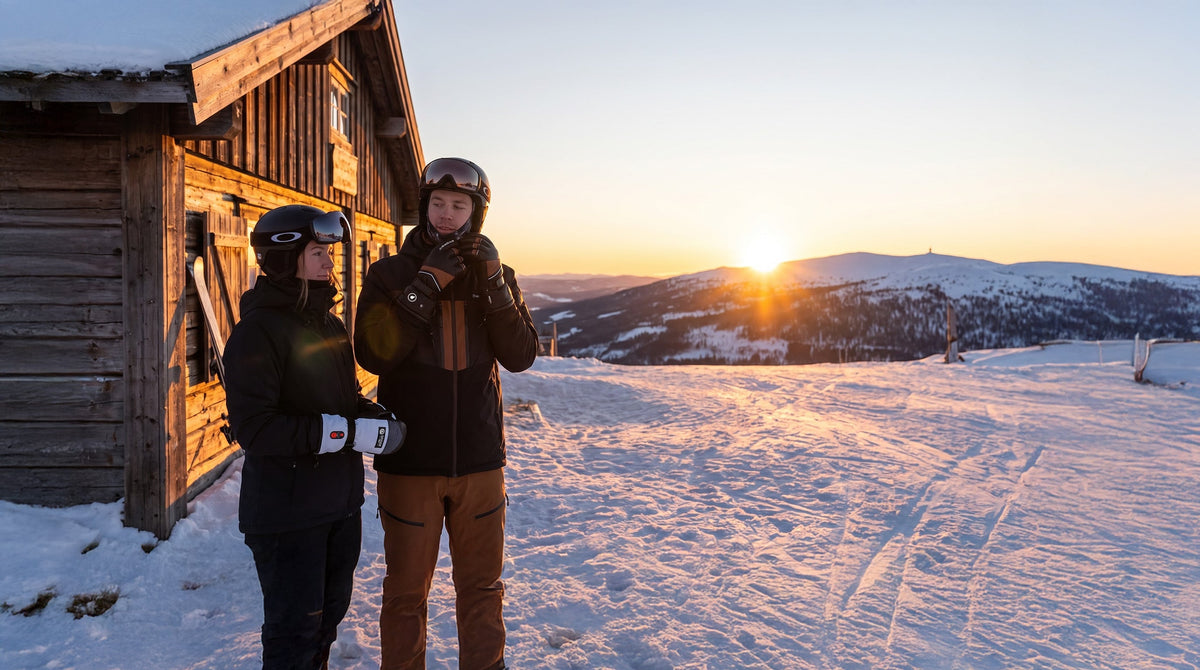
Choosing between ski gloves and mittens is really a choice between two kinds of control: keeping more warmth around your fingers or keeping each finger independently useful. Neither shape wins for every skier. Mittens usually make it easier to preserve warmth, while gloves usually make it easier to grip poles, adjust gear, and handle small controls. The better choice depends on how cold your hands get, how much handwork your day involves, and whether you spend more time moving or waiting.
Why Mittens Usually Feel Warmer
Mittens place your fingers in a shared insulated space. Because the fingers are not separated into individual fabric compartments, this design can make it easier to retain warmth around the hand. That can be especially useful on windy chairlift rides, in wet snowfall, or during long periods of standing still.
That advantage does not mean every mitten is automatically warmer than every glove. Insulation, shell construction, cuff seal, fit, moisture management, and whether the handwear stays dry all matter. A poorly fitting mitten may lose some of that warmth advantage, while a well-fitted glove with effective insulation may feel warmer during active skiing.
Choose mittens first when your main problem is cold fingers, your ski days include long exposure on lifts, or you rarely need to operate small items with bare fingertips.
Why Gloves Usually Offer Better Dexterity
Ski gloves separate the fingers, so they are easier to use when you need precision. You can grip poles individually, tighten a boot or binding, open a zipper, adjust a helmet strap, or use a phone without removing the entire handwear system. That convenience becomes more valuable when your day includes frequent stops, instruction, photography, or equipment changes.
Gloves can also feel more natural for skiers who depend on a precise pole grip. However, that dexterity usually comes with a warmth trade-off: separating each finger creates more surface area for heat loss than keeping the fingers together in a shared space. Tight gloves may also reduce circulation and compromise both warmth and dexterity.
Choose gloves when handling gear is part of your normal routine, when you need independent finger movement, or when you prefer a closer, less bulky feel.

Gloves vs. Mittens for Common Skiing Situations
| Situation | More natural starting point | Why |
|---|---|---|
| Very cold days with long lift rides | Mittens | Shared finger space helps prioritize warmth |
| Technical pole work and active skiing | Gloves | Separate fingers support grip and adjustment |
| Frequent phone, zipper, or buckle use | Gloves | Small controls are easier to handle |
| Resort skiing with long periods outside | Mittens | Warmth often matters more during waiting |
| Mild weather or high-output activity | Gloves | Dexterity may matter more when activity generates more body heat |
| Cold hands but regular gear handling | Gloves | Prioritize insulation and fit while keeping finger separation |
This is a starting point, not a universal ranking. Weather, fit, and personal circulation can change the result.

Fit Matters More Than the Label
The right shape cannot compensate for the wrong fit. Gloves that are too tight can compress insulation and restrict circulation. Mittens that are too loose can create cold pockets and make pole control feel unstable. In either style, leave enough room for your fingers to move without allowing the handwear to fold heavily at the fingertips.
Check the wrist and cuff as carefully as the palm. A secure cuff helps reduce drafts and keeps snow from entering when you fall or handle equipment. If you layer a thin liner underneath, make sure the outer handwear still allows movement rather than squeezing the hand.

What About Heated Ski Gloves and Mittens?
Once you know whether gloves or mittens better match your warmth and dexterity needs, heated handwear becomes a second decision: do you need active warmth beyond passive insulation? Heated handwear can be useful when passive insulation is not enough, especially for skiers whose hands become cold during lifts or lower-movement periods. The important comparison is not simply “heated versus non-heated.” Check where the heat is placed, how the controls can be reached, how the battery is carried, and whether the fit still allows your normal pole grip.
Heated gloves can preserve independent finger movement while adding active warmth. Heated mittens may prioritize warmth even further, but in either format, battery placement, control access, and bulk still need to work with your clothing and equipment.
If you want to understand how newer heated ski-glove technology can bring heating, controls, and on-mountain use together, continue to the Chamonix Smart Heated Ski Gloves guide. For broader criteria on comparing heated-glove options, use the heated gloves buying guide.
The Simple Decision Rule
Choose mittens if warmth is your first priority and your hands spend long periods exposed or inactive. Choose gloves if dexterity, pole control, and frequent gear handling matter more. If you need both, start with your coldest moment: consider insulated gloves or heated handwear when you cannot comfortably trade away finger movement.
The best ski handwear is the one that lets you finish the day with warm, usable hands. Match the shape to your real skiing routine, confirm the fit and cuff, and treat weather protection and controls as part of the decision—not as afterthoughts.

Share:
Best Gifts for People Who Are Always Cold: Winter Gift Guide 2026