


The best heated clothing for a first purchase is the piece that fixes the cold spot that affects you first. Savior Heat's Smart Heated Wearables System looks at warmth from head to toe: different parts of the body call for different heating solutions. If your hands get cold first, start with heated gloves. If your feet are the problem, look at heated socks. If your torso gets cold first, start with a core-heating route such as a heated vest or a close-to-body base layer.
You do not need a full Head-to-Toe Warmth system on day one. Start with the warmth gap that affects your comfort or activity first, then build from there if needed.
Start With the Warmth Gap, Not the Product Category
Your first heated clothing purchase should solve the most disruptive warmth gap. A warmth gap is the body area that gets cold early enough to change your behavior: hands, feet, or core. Once you name that point of failure, the first category becomes much easier to choose.
Use this quick route before you compare products:
| If this happens first | Start with | Why it makes sense |
|---|---|---|
| Your fingers get cold enough to affect comfort or control | Heated gloves | Hands are exposed and active, so direct heat can help protect comfort and grip. |
| Your toes or forefoot get cold inside footwear | Heated socks | Feet often lose warmth during standing, skiing, and long winter walks. |
| Your torso gets cold before your hands or feet | Core-heating clothing | Start with a heated vest or base-layer route, then choose the format that fits how you want to layer. |
Do not buy the category that sounds most complete. Buy the one that removes the first point of failure.
Buy Heated Gloves First If Your Hands Stop the Activity
Choose heated gloves first when cold hands are the reason you cut activities short or lose easy finger control. This route fits people who grip ski poles, walk dogs, take photos, use tools, operate zippers, or handle a phone in cold air. A warm torso will not help much if your fingers are the part that keeps asking to go inside.
For everyday winter use, a Heated Glove Liner such as Savior Heat GVL116G3 is one example of a hands-first solution. Its heating covers the back of the hand and fingers while keeping the palm relatively free for everyday grip and phone use. Because it is liner-style, colder, windy, or wet conditions may still call for a properly sized protective outer glove.
For skiing or heavier snow exposure, a more protective heated ski-glove format, such as GVS305G3, may be more appropriate than a liner-style option.

If you already know your first problem is hand comfort, start here. You can move to a best heated gloves guide later for sizing, insulation, cuff style, glove format, and model-level differences.
Buy Heated Socks First If Cold Feet Decide When You Go Home
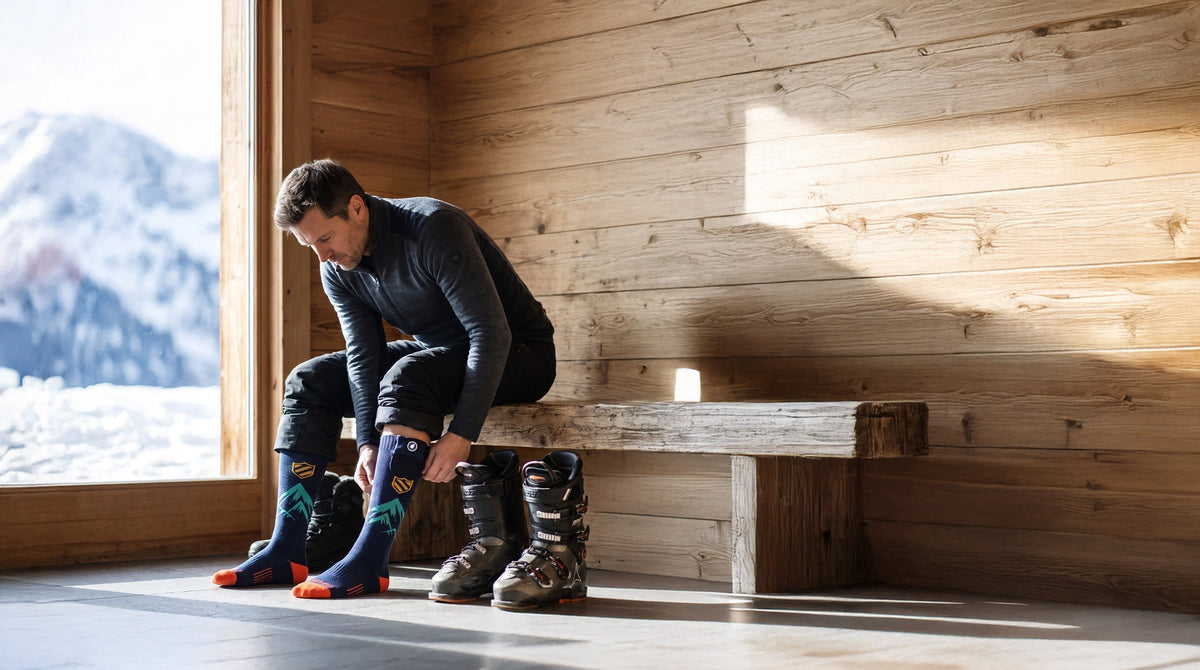
Choose heated socks first when your feet are the limit. This is common for people who stand still outside, ski, sit through cold events, walk in winter boots, or commute with long platform or parking-lot time. Feet are a strong first-purchase signal because once toes get cold inside a boot, adding another jacket layer usually does not solve the problem.
Savior Heat SOS208G3 is one example of a foot-first solution for boot and snow use. Its heating covers the forefoot around the sole, toes, and top of the foot, while the sock construction adds support and cushioning for use inside footwear. That combination matters because heated socks still need to fit comfortably inside the boots you already wear.
Heated socks are also a good first buy when you already own solid outer layers but still feel cold from the ground up. If your coat is fine and your hands are manageable, foot warmth may produce the biggest change in how long you are comfortable outside.
For a deeper foot-only checklist, use the best heated socks guide next. It can take over the next layer of the decision: boot fit, cushioning, heating coverage, runtime, and model-level differences.
Choose a Core-Heating Route If Your Torso Gets Cold First
Choose a core-heating route when your chest, back, or neck area gets cold before your hands or feet. This route fits commuting, outdoor work breaks, dog walking, errands, tailgating, and layered travel days, especially when you spend time waiting, standing, or moving slowly.
Savior Heat VTL201G3 is one example of a core-first solution, with heating across the torso and neck in a heated vest format designed to layer with everyday winter clothing. That makes a heated vest relevant when your torso gets cold before your hands or feet, especially during lower-movement winter situations.
If core warmth is your first need, the next question is how you want to wear the heat. A heated vest works as an easy-to-layer torso option, while a base layer keeps warmth closer to the body under regular clothing. If that distinction matters, use the heated vest vs heated base layer guide for the second-stage decision.

Compare the Three First-Buy Routes
| First buy | Best fit | Check before buying | Main tradeoff |
|---|---|---|---|
| Heated gloves | Your hands get cold first or you need finger control outside. | Grip needs, cuff style, touchscreen needs, glove thickness, and activity. | They solve hands well, but they do not warm your feet or core. |
| Heated socks | Your toes or forefoot get cold inside boots. | Boot room, sock height, cushioning, fabric feel, and battery pocket comfort. | They help from the ground up, but fit inside footwear matters. |
| Core-heating clothing | Your torso chills during low-movement cold time. | Layering style, vest vs base-layer preference, under-jacket space, and neck comfort. | It helps with torso warmth, but you still need to choose the right format before comparing models. |
This is why there is no universal winner between gloves, socks, and a torso-heating layer. Each route is "best" only when it matches the cold pattern that changes your behavior first.
Use Activity and Layering Space as Tie-Breakers
If two categories still feel equally useful, ask which cold spot interferes with your main activity first. During skiing or snowboarding, for example, gloves may come first if cold hands make it harder to manage poles, buckles, or other gear. If cold builds inside your boots and shortens the day, heated socks may be the better starting point.
For everyday routines, look at which problem repeats most often across the situations you actually face. If your hands are only an issue during one task but your core gets cold during commuting, waiting, and errands, a core-heating layer may be the more practical first purchase. If hand discomfort repeatedly interrupts several activities, gloves may come first instead.
Layering space can break a tie too. Heated socks need enough room inside your footwear, glove liners may need space under a protective outer glove, and core-heating clothing needs to fit into the layers you already wear. If one option creates a fit or layering problem in your current setup, another warmth gap may be easier to solve first.
For people who want a clean layering system later, start narrow now and expand only when you know the first piece helped. A complete Head-to-Toe system can come later; this article is about the first item, not the full kit on day one. If you already own heated gear and want to add the next category, use the existing-owner expansion guide instead of using this as a first-purchase decision.

First-Purchase Checklist
Key Takeaways
For a first purchase, the best heated clothing is not the biggest system or the category with the loudest promise. It is the piece that fixes your first and most disruptive cold point.
Start with heated gloves if your hands stop the activity. Start with heated socks if your feet decide when you go home. Start with a core-heating route if your torso gets cold first, then decide whether a heated vest or base layer better fits how you layer. After that first piece proves itself, you can build toward a fuller cold-weather setup with much more confidence.
Explore the heated gloves, heated socks, and core-heating routes by starting with the warmth gap you can name fastest.

Share:
Best Heated Socks: What to Look for Before You Buy