

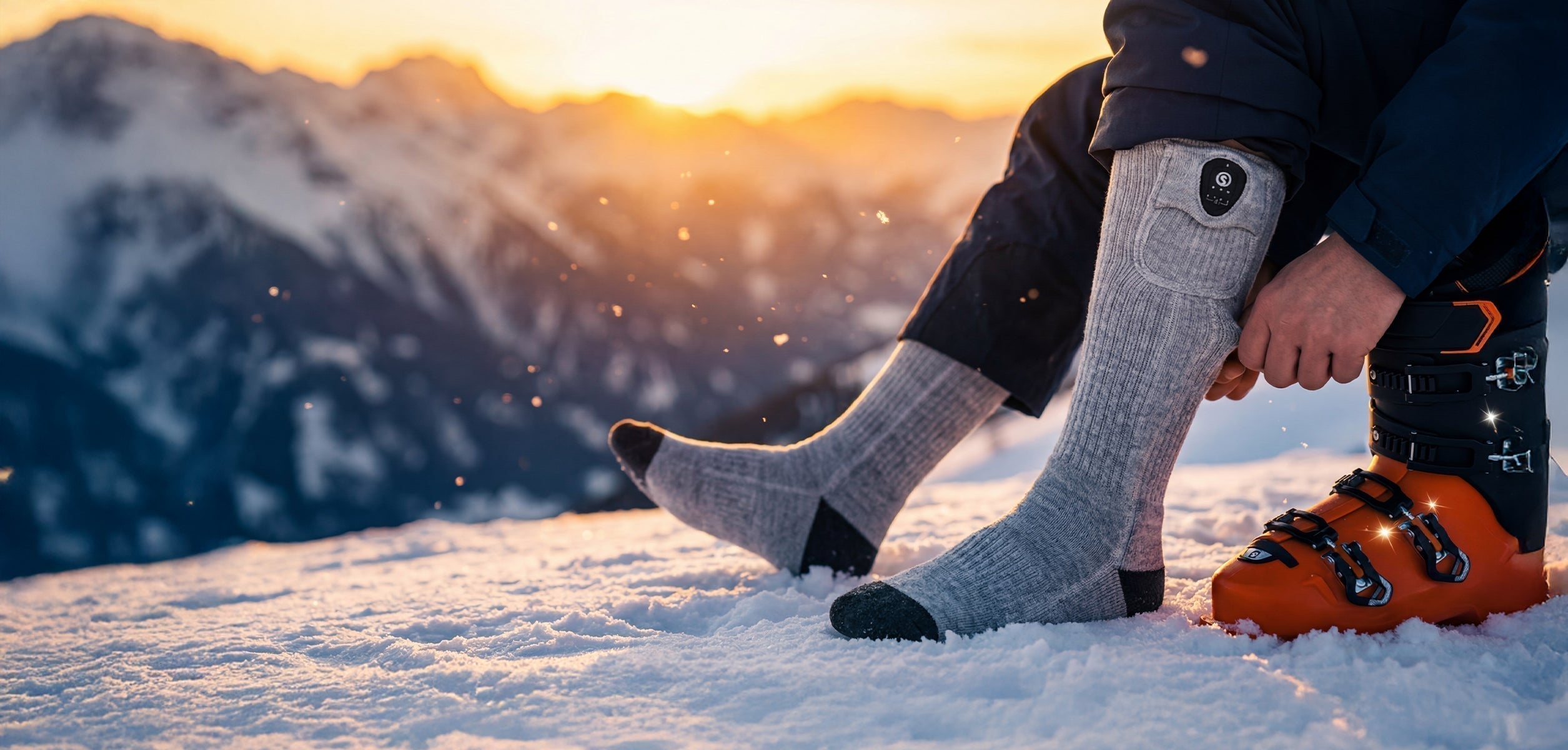
Cold feet are a common problem in winter, whether during daily commuting, skiing, or extended outdoor activities. Many people look for ways to keep their feet warm in cold weather, but simply adding more layers often has limited effect. In this article, we will show you how to keep your feet warm in cold conditions, from choosing the right sock materials to using heated socks. We will also share additional practical tips for staying warm during winter.
Why Do Your Feet Get Cold in Winter?
Cold feet are a common winter complaint, particularly during outdoor activities or when sitting still for extended periods. To better understand how to keep your feet warm in winter, it is important to first look at the main factors that contribute to heat loss.
- One key reason is limited blood circulation. In cold conditions, the body naturally reduces blood flow to the extremities in order to preserve core temperature. This means less heat is delivered to the feet, making them more vulnerable to cold. For individuals with Raynaud’s syndrome, this response can be more intense, as blood vessels constrict more easily, leading to increased sensitivity to low temperatures.
- Moisture also plays a significant role. Sweat from physical activity or exposure to snow and rain can create damp conditions inside socks and footwear. Since moisture transfers heat away from the body more quickly than dry air, even a small amount of dampness can make feet feel noticeably colder.
- In addition, improper gear choices can significantly contribute to the problem of cold feet. Wearing cotton socks can trap moisture and cause heat to escape more quickly, while poorly insulated footwear allows cold air and ground temperatures to penetrate more easily. Similarly, overly tight shoes can restrict blood circulation, which further reduces the body’s ability to maintain warmth in the feet and leads to discomfort during prolonged wear.

5 Tips on How to Keep Feet Warm in Winter—From Socks and Footwear to the Circulatory System
Below are five effective methods that can help warm up cold feet and improve overall comfort during cold weather.
Choose the Right Sock Materials
Socks act as the first layer of insulation and play a key role in temperature regulation. The material directly affects how well your feet retain warmth throughout the day.
- Merino wool is a common choice for winter due to its ability to retain heat while remaining breathable and moisture-wicking, making it suitable for activities like skiing or hiking.
- Synthetic fabrics such as polyester or nylon blends are also effective, particularly for high-intensity use, as they dry quickly and offer good durability.
- Cotton is generally not recommended, as it absorbs moisture and dries slowly, which can accelerate heat loss.
Keep Your Feet and Shoes Dry at All Times
Moisture is a key factor that causes feet to feel cold, as it increases heat loss once it builds up inside footwear. During activities like skiing or hiking, dampness can result from both sweat and external exposure to snow or rain. In longer outdoor sessions, carrying a spare pair of socks allows for a quick change when needed, helping restore comfort.
Select Footwear Based on Activity and Conditions
Choosing the right winter footwear depends on both the activity level and the environment, as materials, insulation, and sole design all influence warmth and comfort.
For active use such as skiing, hiking, or walking, footwear should provide a balance between insulation and breathability. Waterproof leather or synthetic uppers combined with breathable linings help keep moisture out while allowing sweat to escape. This prevents dampness, which can quickly reduce warmth during movement. Lightweight insulated boots or performance winter shoes are generally suitable for these conditions.
For low-activity situations, such as standing outdoors or ice fishing, higher insulation is needed to retain heat over time. Boots with thicker linings, such as fleece or synthetic insulation, provide better protection against the cold. In more extreme conditions, heated boots can provide consistent warmth by actively generating heat, making them especially suitable for individuals who are sensitive to cold.
The sole also plays an important role. Thicker, well-insulated soles help minimize heat loss to cold surfaces.
Support Blood Circulation
Blood circulation is a key but often overlooked factor in maintaining foot warmth. Even with proper socks and insulated footwear, reduced blood flow can still cause cold feet.
During winter activities that involve long periods of inactivity, such as sitting on ski lifts or commuting, keeping your feet lightly active can help maintain warmth. Simple movements like wiggling your toes or standing up to walk briefly support circulation and reduce heat loss.
Use Additional Heating Solutions When Needed
In very cold conditions or during prolonged outdoor exposure, standard insulation may not provide enough warmth, making supplemental heating solutions such as heated socks and heated insoles more effective.
SAVIOR HEAT Heated Socks feature an EH far-infrared heating system positioned around the forefoot and toes to deliver targeted warmth, with three heat settings (Low, Medium, High) offering flexible comfort and a runtime of approximately 3–10 hours. They also combine App and button controls for easy temperature adjustment in cold conditions. Powered by a 7.4V battery system, they provide stable heat output and extended usage time compared to lower-voltage alternatives. Made from breathable, soft-touch materials with a secure battery pocket design, they are suitable for winter outdoor activities such as skiing, hiking, and cycling, as well as for users prone to cold feet or poor circulation.

Heated insoles are another practical option for cold-weather use. They are designed to be placed inside shoes and powered by a rechargeable battery, which supplies energy to built-in heating elements embedded within the insole structure. Once activated, they generate consistent heat directly under the feet, helping to maintain a stable temperature in low-temperature environments.
For a more detailed comparison of heated socks and heated insoles, refer to this guide: Heated Insoles vs. Heated Socks.
Conclusion
Keeping your feet warm in cold weather requires more than simply adding layers. It involves selecting the right materials, maintaining dryness, choosing appropriate footwear, and supporting circulation. In colder or more demanding conditions, additional heating solutions can further improve comfort.

Share:
Battery for Heated Vest: How to Choose the Right Power for Warmth and Comfort
What to Wear Deep Sea Fishing: A Practical Guide to Deep Sea Fishing Apparel